

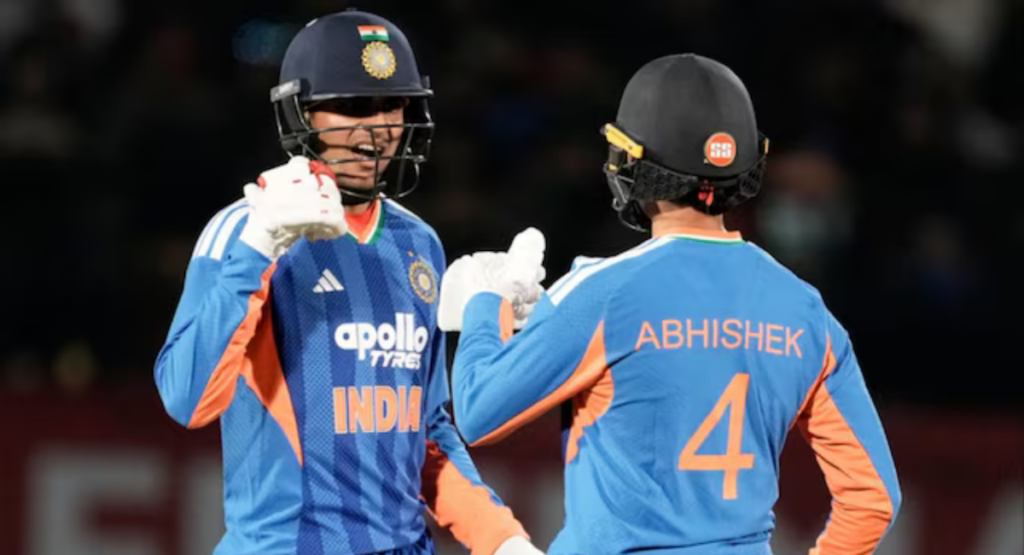
The India vs South Africa 3rd T20 series is getting immense attention as people are taking all updates from the breathtaking Dharamsala stadium. With such a balanced series, both sides have entered this match with some definite aims. While India wants to dominate its own country, South Africa is shifting its focus to making a sturdy comeback. Right from the very first delivery, one can sense a high level of intensity with all eyes on Abhishek Sharma and Shubman Gill, the opener of Team India.
South Africa’s Scorecard – 117 (10 wkts, 20 ov)
| Batting | Runs | Balls | 4s | 6s |
| Quinton de Kock (wk) | 1 | 3 | 0 | 0 |
| Reeza Hendricks | 0 | 3 | 0 | 0 |
| Aiden Markram (c) | 61 | 46 | 6 | 2 |
| Dewald Brevis | 2 | 7 | 0 | 0 |
| Tristan Stubbs | 9 | 13 | 0 | 0 |
| Corbin Bosch | 4 | 9 | 0 | 0 |
| Donovan Ferreira | 20 | 15 | 1 | 1 |
| Marco Jansen | 2 | 7 | 0 | 0 |
| Anrich Nortje | 12 | 12 | 0 | 1 |
| Lungi Ngidi* | 2 | 3 | 0 | 0 |
| Ottniel Baartman | 1 | 2 | 0 | 0 |
Bowling Figure
- Arshdeep Singh – 4 ov, 13 runs, 2 wkts
- Harshit Rana – 4 ov, 34 runs, 2 wkts
- Hardik Pandya – 3 ov, 23 runs, 1 wkt
- Varun Chakaravarthy – 4 ov, 11 runs, 2 wkts
- Shivam Dube – 3 ov, 21 runs, 1 wkt
- Kuldeep Yadav – 2 ov, 12 runs, 2 wkts
India begins the innings with confidence. Abhishek Sharma displays aggressive intent from ball one. He takes on the bowlers effortlessly and appears comfortable playing pace and bounce. His aggressive fashion puts pressure on South Africa early on. Contrastingly, Shubman Gill goes about his innings with a different mindset.
They make a good pair in the opening combination. They share the strikes nicely and do not take too many chances. Also, this results in a constant stream of runs for India during the power play. South Africa struggles to get an early breakthrough but succeeds in getting a wicket.
India’s Scorecard – 120 (3 wkts, 15.5 ov)
| Batting | Runs | Balls | 4s | 6s |
| Abhishek Sharma | 35 | 18 | 3 | 3 |
| Shubman Gill | 28 | 28 | 5 | 0 |
| Tilak Varma* | 26 | 28 | 5 | 0 |
| Suryakumar Yadav (c) | 12 | 11 | 2 | 0 |
| Shivam Dube* | 10 | 4 | 1 | 1 |
Bowling Figure
- Lungi Ngidi – 3 ov, 23 runs, 1 wkt
- Marco Jansen – 3 ov, 24 runs, 1 wkt
- Corbin Bosch – 3 ov, 18 runs, 1 wkt
However, South Africa does not lose hope. They quickly adjust with their bowlers. The lengths are mixed, and the pace is changed cleverly. Short balls test Abhishek, while fuller deliveries test Gill’s defense. This helps in slowing down the rate of scoring slightly.
Nevertheless, Abhishek keeps playing his positive cricket. He chooses his shots and then goes after the ones that come into his zone. Gill keeps calm and collected as well. This combination means India is still ahead in this game despite some improved bowling. The Dharamsala pitch has enough bounce to make things interesting for both batsmen and bowlers. Seamers get some assistance, especially early in the game.
Middle Overs Bring a Tactical Battle
As the powerplay ends, the middle overs become important. The game changes gears into a tactical phase of the game. Suryakumar Yadav walks in confidently and looks to up the ante. South Africa responds by tightening the infield and bowling disciplined lines.
Runs do not come all that easily anymore. Hence, India strikes the ball and rotates it. Singles and doubles start playing an important role. Partnership becomes the primary concern instead of big hits. This way, India does not experience jolts at any moment and keeps the innings stable. Meanwhile, South Africa hunts for wickets to get back into the game. With each over, the pressure increases, and this turns out to be the most important, decisive phase in the game.
Fielding Effort and Conditions Add to the Pressure
Fielding for South Africa does much of the work in the middle overs: tight and saves crucial runs for the team. Quick throws in and athletic stops put that extra pressure on the batters. Meanwhile, the cool weather in Dharamsala starts to take its toll on the match.
The favorable conditions mean that the bowlers get longer spells. There is also some purchase for the spinners once the ball becomes older. This means batting is all about patience and judicious shot selection. India’s batters respond well by selecting the right moments to attack and defend
Tense Finish Keeps Fans Hooked
The match reaches a point of final overs, thereby bringing tension with every ball becoming crucial. Bowlers stick to their plans, while batters look for boundaries at the right time. A single big over can change the game instantly.
Key wickets fall, there are boundaries with loud cheers from the crowd; momentum keeps shifting between both sides. The match has fans glued to live scores, knowing full well that the result can swing either way until the last over.
Conclusion
All in all, the India vs South Africa 3rd T20 is an action-packed encounter from the word go, with Abhishek Sharma’s aggressive intent at the beginning complemented by Shubman Gill’s steadfast approach that always left India on course. Some smart bowling and sharp fielding by the visitors kept the game intense. With pressure, drama, and constant twists, this clash once again underlined the thrill and unpredictability of T20 cricket.

