

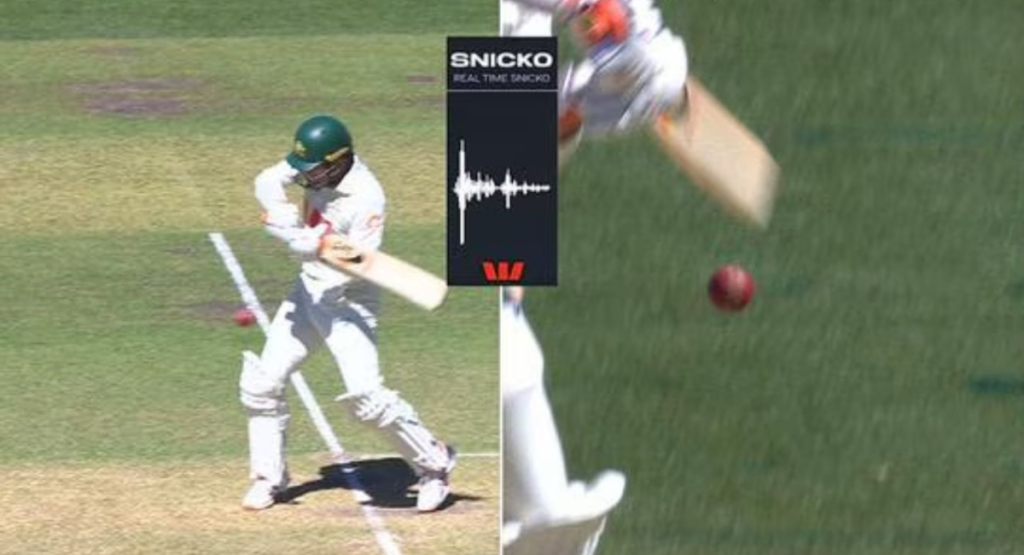
The ICC accepts the technology error following a dramatic DRS controversy during the third Ashes Test between Australia and England at Adelaide Oval. The incident took place on the opening day of the match and quickly drew attention. A disputed appeal involving Alex Carey led to confusion. Soon after, questions were raised about the accuracy of the Decision Review System. Eventually, the ICC stepped in to resolve the issue.
The Moment That Sparked the Controversy
The incident occurred when Alex Carey was batting confidently for Australia. England pacer Josh Tongue bowled a sharp delivery that appeared to take an edge. The on-field umpire, however, gave Carey not out. England captain Ben Stokes immediately decided to review the decision.
At first, the third umpire checked the available technology. Snicko showed a sound spike. However, the spike appeared slightly before the ball passed the bat. Because of this timing mismatch, the umpire ruled there was no contact. As a result, the not-out decision remained. England also lost one of their valuable reviews.
Snicko Malfunction Identified Later
Soon after the decision, doubts were raised over the technology used. The Snicko operator later admitted a mistake. It was revealed that the wrong microphone input had been selected. This error produced a misleading sound spike.
Consequently, England’s team management raised the issue with the match officials. The concern was then escalated to match referee Jeff Crowe. The ICC reviewed the incident carefully. After examining the technical details, officials acknowledged that the system had failed.
ICC Steps In and Restores England’s Review
Following the investigation, the ICC confirmed the error. Since the incorrect decision was caused by a technological malfunction, England’s lost review was reinstated. According to ICC playing conditions, teams are not penalized when technology does not function properly. Therefore, England regained their review for use later in the match. This move helped ensure fairness. However, it did not erase the frustration felt by the players and fans.
Carey Makes England Pay
Meanwhile, Alex Carey made the most of his reprieve. After surviving the appeal, he continued batting with confidence. He went on to score a crucial century for Australia. His innings played a major role in pushing Australia to a strong total on Day 1. Because of this, the incident became even more significant. Many former cricketers and experts pointed out how one error can change the course of a Test match.
Renewed Debate Around DRS Technology
This controversy has once again highlighted concerns around DRS reliability. While technology has reduced umpiring errors, it is still not perfect. Moreover, different venues use different systems and calibrations. As a result, players and analysts have called for better consistency. Some believe there should be clearer protocols when technical glitches occur. Others have urged cricket authorities to improve monitoring during live decisions.
Conclusion
In conclusion, the ICC accepts the technology error and acted within the rules by restoring England’s review after the Alex Carey appeal. While the decision corrected a procedural mistake, it also exposed flaws in the current system. Going forward, the incident serves as a reminder that technology must support the game fairly, especially during high-pressure Test matches.

